
Frequently Asked Questions and Answers about Oxygen Concentrators
2026-06-05
Frequently Asked Questions and Answers about Oxygen Concentrators
1. What does an oxygen concentrator do?
2. What are the signs of needing more oxygen?
3. How long can a patient be on the oxygen concentrator?
Here are the answers to your questions about oxygen concentrators, based on current medical guidelines and technical literature.
1. What does an oxygen concentrator do?
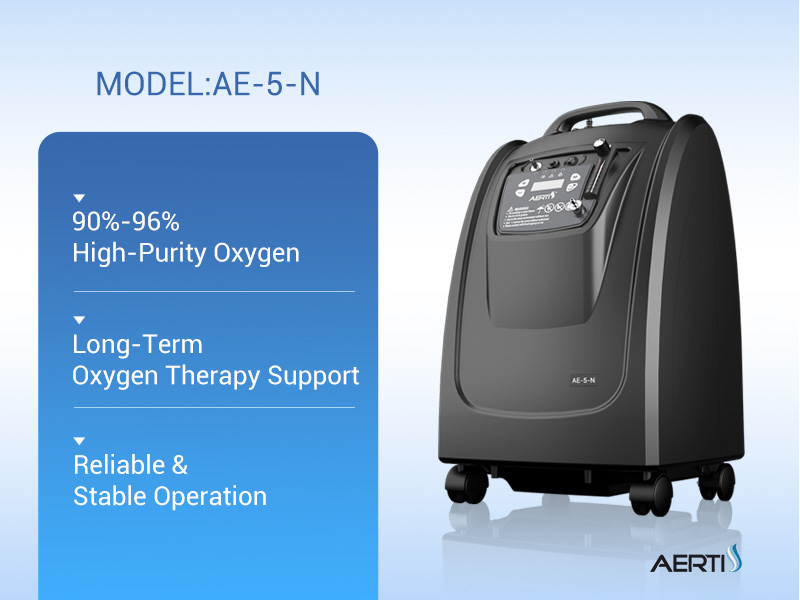
An oxygen concentrator is a medical device that provides supplemental oxygen. It works by taking in room air (which is about 21% oxygen and 78% nitrogen), filtering out most of the nitrogen, and delivering concentrated oxygen (typically 90-96% pure) to the patient.
The device uses a process called Pressure Swing Adsorption (PSA). An internal compressor pushes air through canisters filled with a material called zeolite, which absorbs nitrogen while allowing oxygen to pass through. The concentrator alternates between two canisters—while one absorbs nitrogen and produces oxygen, the other releases the captured nitrogen back into the air, ensuring a continuous supply of oxygen.
Key characteristics:
Power source: Electrically powered, so an emergency backup (like an oxygen cylinder or battery) is essential in case of power failure.
Output: Most home units deliver up to 5 liters per minute of 90-96% pure oxygen
Common use: Long-term oxygen therapy at home for patients with chronic lung conditions
2. What are the signs of needing more oxygen?
When blood oxygen levels drop too low (a condition called hypoxemia), the body shows several warning signs :
Common symptoms:
Shortness of breath (dyspnea)
Fast or labored breathing
Rapid or pounding heartbeat
Confusion or difficulty thinking clearly
Breathing that is too slow or shallow to meet the body's needs
Measuring oxygen levels:
A healthy oxygen saturation (SpO₂) measured by a finger pulse oximeter is typically 95-100%
A reading below 90% is considered low and indicates hypoxemia
A reading below 60 mmHg on an arterial blood gas test also indicates hypoxemia
Important: These symptoms indicate a need for evaluation by a healthcare provider. Supplemental oxygen should only be used under medical supervision.
3. How long can a patient be on the oxygen concentrator?
There is no fixed time limit—patients may use an oxygen concentrator for as long as medically necessary, which can be weeks, months, or years for chronic conditions. However, guidelines specify how many hours per day are recommended.
Practical considerations:
Concentrators are designed for long-term continuous operation, with zeolite adsorbents lasting about 20,000 hours (approximately 10 years of normal use)
Routine maintenance (cleaning filters, checking for leaks) is required to ensure reliable operation
For ambulatory patients, portable oxygen concentrators may be used outside the home.
If you are considering oxygen therapy for yourself or a loved one, I strongly recommend consulting a pulmonologist or primary care physician. They can perform proper oxygen saturation testing (pulse oximetry or arterial blood gas) and prescribe the correct flow rate and duration based on individual medical needs.